
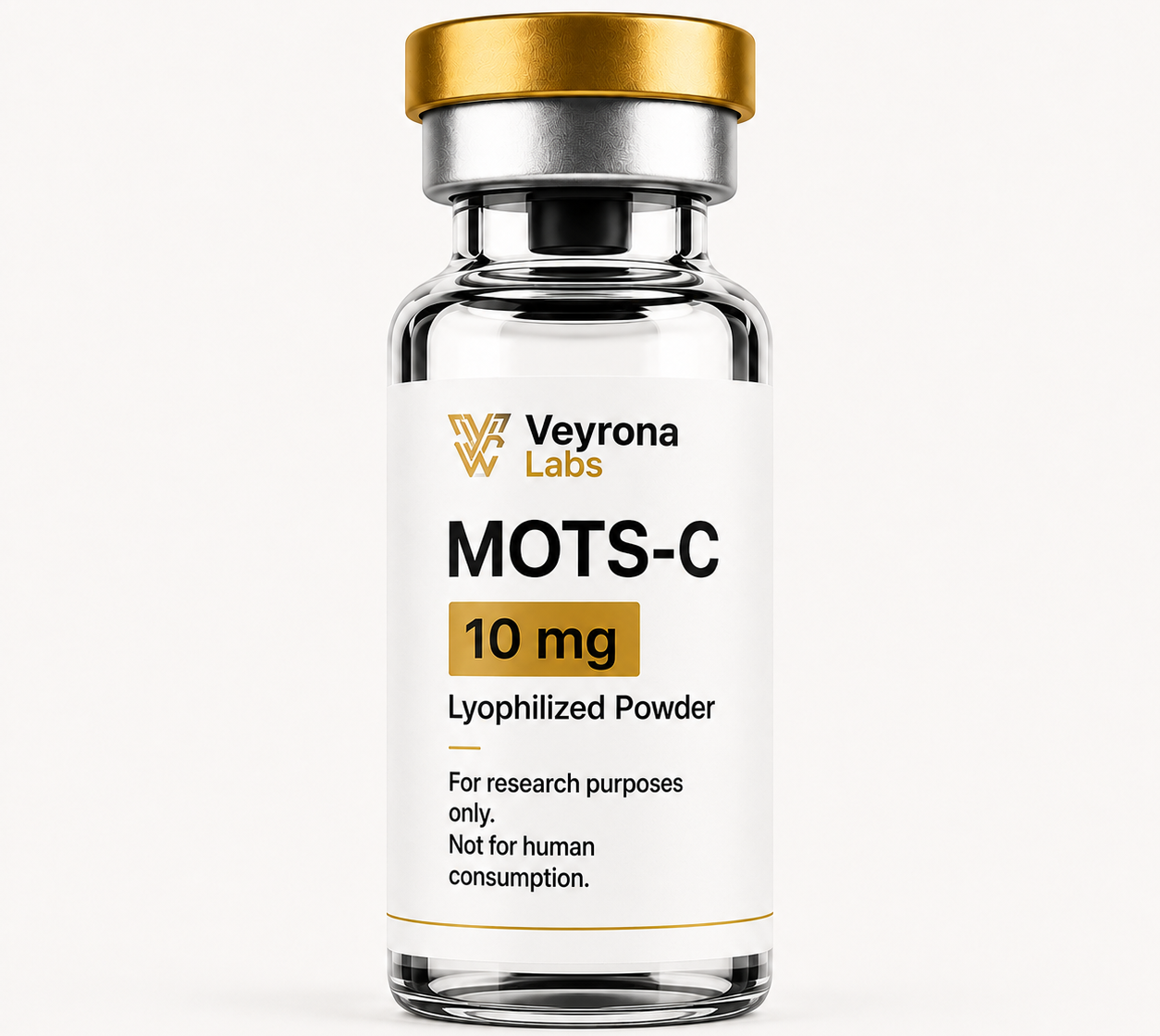

MOTS-C 10 mg
MOTS-C is a 16-amino-acid peptide encoded within mitochondrial DNA. It is studied mainly in connection with glucose use, cellular energy, exercise responses and metabolic adaptation.
Why do researchers study MOTS-C?
Glucose use
Research into how muscle cells take up and use glucose as an energy source.
Metabolic flexibility
Studies of how cells switch between available fuels during changing energy demands.
Exercise response
Research into the signals produced by muscle and mitochondria during physical activity.
Healthy ageing
Studies of mitochondrial communication, physical capacity and age-related metabolic changes.
What is MOTS-C?
MOTS-C is a naturally occurring signalling peptide made from information encoded inside mitochondrial DNA. It contains 16 amino acids.
Although it originates from the mitochondria, MOTS-C can also move to the cell nucleus, where it participates in the way cells adjust their activity during metabolic stress.
Understanding the biological signal
Mitochondria do more than produce energy. They also send signals that help cells adapt to exercise, limited nutrients and other changes in energy demand.
MOTS-C is studied as one of these mitochondrial messages, particularly in muscle and whole-body glucose regulation.
What have studies found?
Glucose use and metabolic balance
The original MOTS-C study reported increased glucose use in cells and improved metabolic balance in mice exposed to a high-fat diet.
Communication with the cell nucleus
Researchers found that MOTS-C can move into the nucleus during metabolic stress and influence genes involved in protection and energy regulation.
Physical performance
In mice of different ages, MOTS-C improved running capacity and supported physical performance during metabolic challenge.
Exercise-related signalling
A human MOTS-C variant was linked with physical capacity, while additional research showed that exercise changes circulating MOTS-C levels.
Selected research
- MOTS-C and metabolic balanceCell and animal research · PubMed
- MOTS-C communication with the cell nucleusCellular mechanism study · PubMed
- MOTS-C, exercise and physical capacityAnimal and human research · PubMed
Product details at a glance
01Research areas⌄
MOTS-C is studied in connection with glucose use, cellular energy, exercise responses and metabolic adaptation.
02What the package contains⌄
One sealed laboratory vial containing 10 mg of freeze-dried MOTS-C material, according to the selected product variant.
03Storage of the freeze-dried product⌄
Keep the sealed freeze-dried vial at −20 °C, dry and protected from light. Let the closed vial reach room temperature before opening to limit condensation.
04Handling a prepared laboratory solution⌄
After preparation with bacteriostatic water, keep refrigerated at 2–8 °C and protected from light. Do not freeze; minimize repeated warming and cooling.
05Why the vial can look almost empty⌄
10 mg is a small mass. After freeze-drying, the material can form a thin layer or compact deposit at the bottom of the vial and may appear smaller than expected.
Match the report to the vial
Available analytical results are organized by product and batch. Always compare the batch identifier in the report with the identifier on the vial label.
For laboratory and analytical research only. Not for human or veterinary use.




Reviews
There are no reviews yet.