
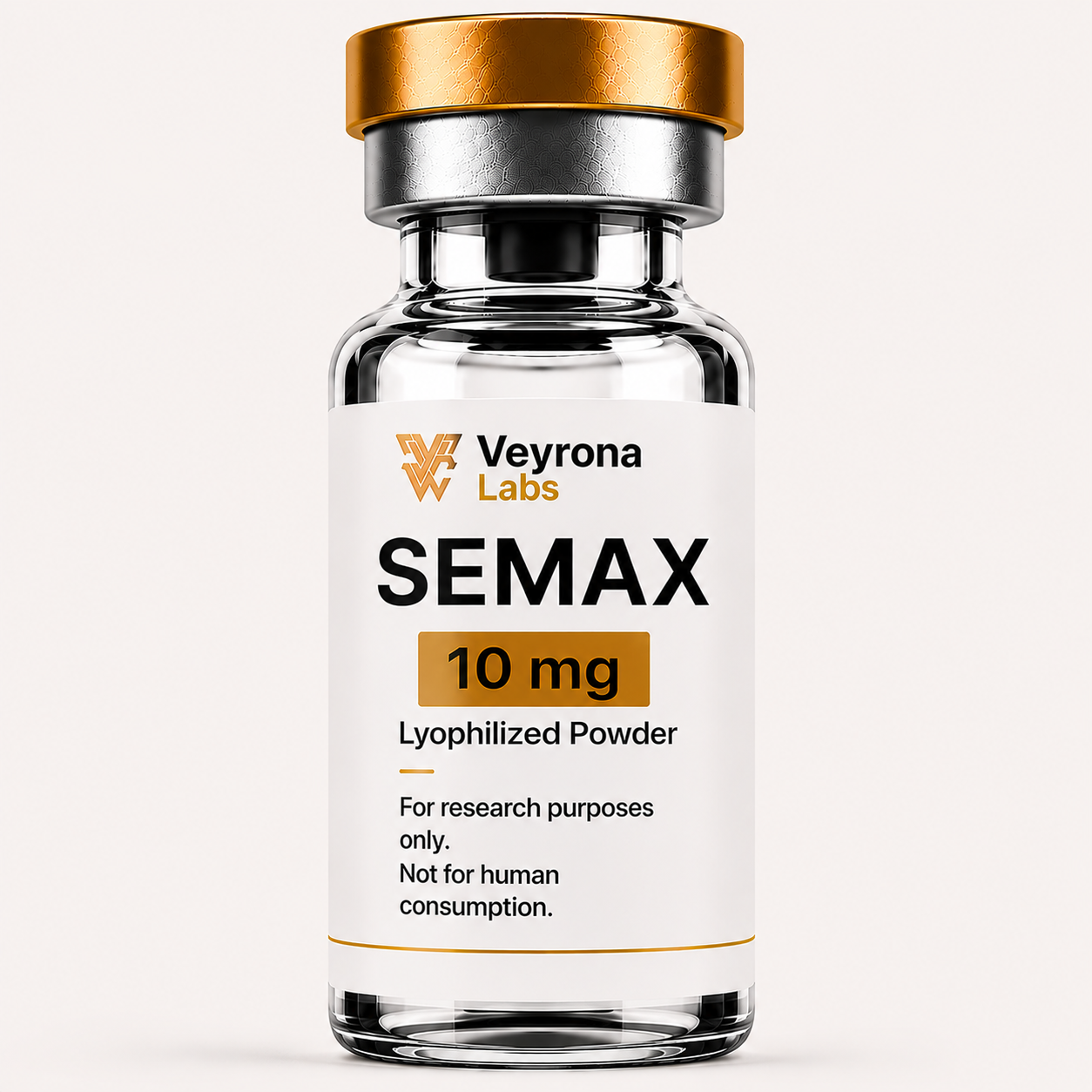

Semax 10 mg
Semax is a seven-amino-acid research peptide derived from a short part of ACTH. It is studied mainly in connection with brain-cell protection, learning, memory and recovery after reduced blood flow to the brain.
Why do researchers study Semax?
Brain-cell protection
Research into how nerve cells respond to low oxygen, reduced blood flow and other stress.
Learning and memory
Animal studies of attention, memory formation and cognitive performance.
BDNF signalling
Research into brain-derived neurotrophic factor, a protein involved in nerve-cell adaptation.
Stroke recovery
Human and animal studies examining neurological and motor recovery.
What is Semax?
Semax is a synthetic heptapeptide made from seven amino acids. Its sequence combines the ACTH (4-7) fragment with Pro-Gly-Pro.
The peptide was designed to retain neuroactive properties without the hormonal activity associated with full-length ACTH.
Understanding the biological signal
Brain cells respond to injury by changing protective proteins, growth signals and patterns of gene activity.
Semax research focuses on these adaptive responses, including BDNF signalling, nerve-cell survival and the recovery of brain function after reduced blood flow.
What have studies found?
BDNF and motor recovery
In 110 people recovering from ischemic stroke, Semax was associated with higher blood BDNF levels and faster improvement in movement and everyday functional scores.
Neurological recovery
Earlier clinical studies reported improved neurological recovery when Semax was included during the acute stage of ischemic stroke care.
Changes in protective gene activity
In rat brain tissue after reduced blood flow, Semax changed the activity of genes involved in immune signalling, nerve-cell communication and tissue protection.
Learning and memory pathways
Experimental work has connected Semax with BDNF-related signalling, synaptic adaptation and improved performance in several learning and memory tasks.
Selected research
- Semax, BDNF and stroke rehabilitationHuman rehabilitation study · PubMed
- Semax in acute ischemic strokeClinical research · PubMed
- Semax and gene activity after brain ischemiaAnimal molecular research · PubMed
- Semax research reviewNeurobiology review · PubMed
Product details at a glance
01Research areas⌄
Semax is studied in connection with brain-cell protection, learning, memory, BDNF signalling and stroke-recovery research.
02What the package contains⌄
One sealed laboratory vial containing 10 mg of freeze-dried Semax material, according to the selected product variant.
03Storage of the freeze-dried product⌄
Keep the sealed freeze-dried vial at −20 °C, dry and protected from light. Let the closed vial reach room temperature before opening to limit condensation.
04Handling a prepared laboratory solution⌄
After preparation with bacteriostatic water, keep refrigerated at 2–8 °C and protected from light. Do not freeze; minimize repeated warming and cooling.
05Why the vial can look almost empty⌄
10 mg is a small mass. After freeze-drying, the material can form a thin layer or compact deposit at the bottom of the vial and may appear smaller than expected.
Match the report to the vial
Available analytical results are organized by product and batch. Always compare the batch identifier in the report with the identifier on the vial label.
For laboratory and analytical research only. Not for human or veterinary use.
Reviews
There are no reviews yet.