
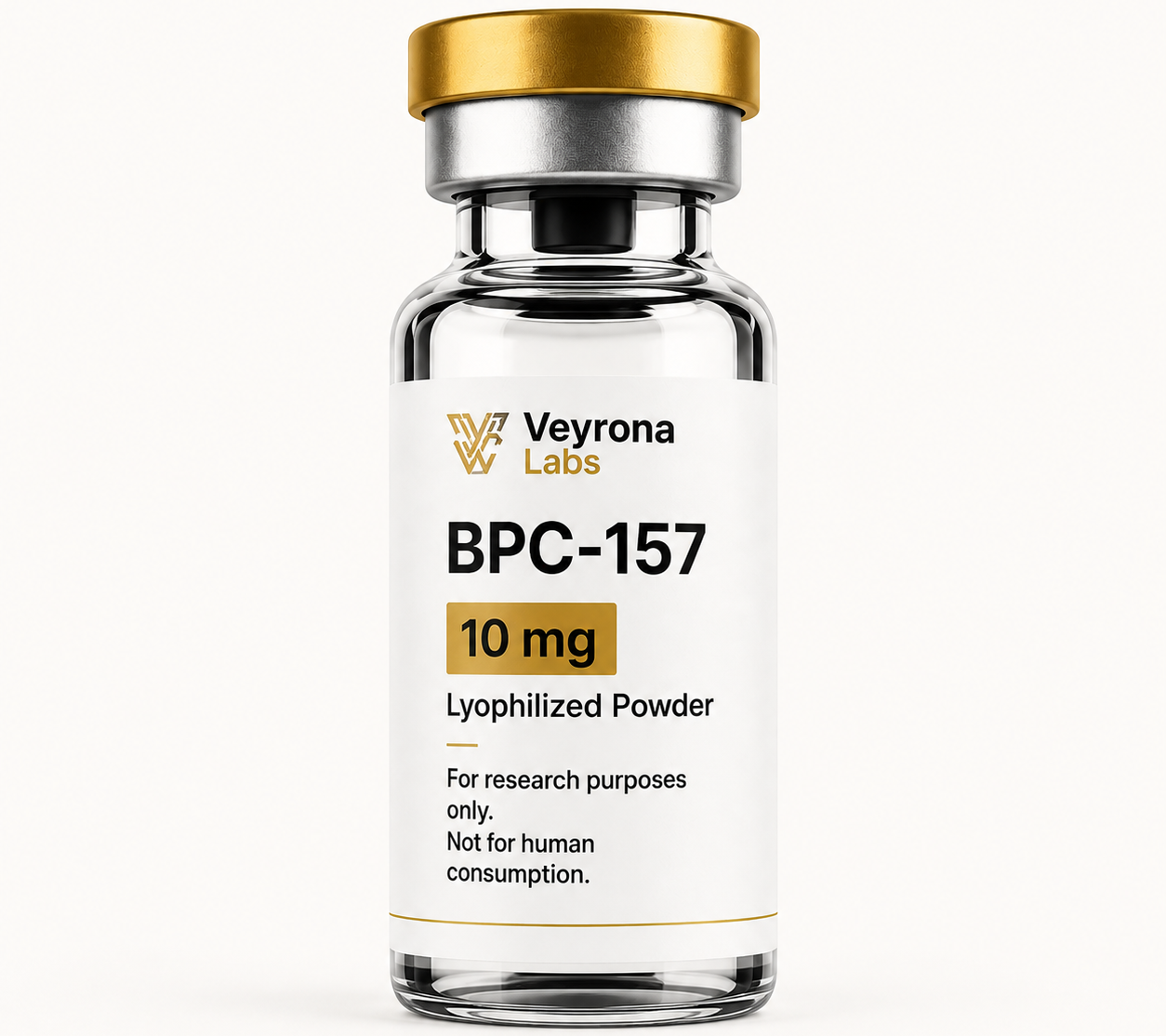
BPC-157 10 mg
BPC-157 is a 15-amino-acid peptide studied mainly in connection with tissue repair, tendon and ligament recovery, digestive-system protection and the formation of new blood vessels.
Why do researchers study BPC-157?
Tendons and ligaments
Research into repair cells, collagen organization and recovery following tendon or ligament injury.
Muscles and other tissues
Studies of healing processes following muscle, bone and soft-tissue injury.
Stomach and intestines
Research into the protective lining of the digestive tract and the healing of experimental ulcers, fistulas and intestinal connections.
Blood vessels and circulation
Studies of signals involved in the formation of small blood vessels and the delivery of blood to repairing tissue.
What is BPC-157?
BPC-157 is a laboratory-made peptide composed of 15 amino acids. Its sequence is associated with research into protective proteins found in the stomach, and the name “body protection compound” is commonly used in the scientific literature.
Researchers study BPC-157 mainly to understand how cells and tissues organize their response after damage.
Coordinating the response to damage
Repairing tissue requires several processes to work together. Repair cells need to reach the damaged area, attach to it and begin rebuilding its structure.
At the same time, small blood vessels help bring oxygen and nutrients to the area. BPC-157 research examines its connection with both of these processes and with the protective lining of the digestive system.
What have studies found?
Movement and survival of repair cells
Fibroblasts are cells that help rebuild tendons and other connective tissues. In laboratory tendon models, BPC-157 increased their movement, spreading and survival. Researchers also observed activity in proteins that help these cells attach and move across damaged tissue.
Formation of new blood vessels
Researchers observed greater formation of small blood vessels in laboratory models and improved recovery of blood flow in rats. The study connected these findings with VEGFR2, a receptor that helps coordinate the growth of new vessels.
Healing in the stomach and intestines
Animal studies have examined BPC-157 in experimental ulcers, fistulas and surgically connected sections of the intestine. Researchers reported stronger tissue repair and improved healing of these connections.
Research into bladder discomfort
A pilot report followed 12 women with interstitial cystitis who received BPC-157 directly into the bladder as part of a clinical procedure. Researchers recorded improvement in pain, urgency and related symptoms during follow-up.
Selected research
- BPC-157 and tendon repair cellsLaboratory research into fibroblast movement, spreading and survival · PubMed
- New blood-vessel formation and blood-flow recoveryCell and animal research involving the VEGFR2 pathway · PubMed
- Digestive-system healing researchReview of experimental intestinal connections, fistulas and protective processes · PubMed
- Pilot report in interstitial cystitisSmall early study involving 12 women · PubMed
Product details at a glance
01Research areas⌄
BPC-157 is studied in connection with tendon and ligament repair, muscle and soft-tissue recovery, digestive-system protection and the formation of new blood vessels.
02What the package contains⌄
One sealed laboratory vial containing 10 mg of freeze-dried BPC-157 material.
03Storage of the freeze-dried product⌄
Keep the sealed freeze-dried vial at −20 °C, dry and protected from light. Let the closed vial reach room temperature before opening to limit condensation.
04Handling a prepared laboratory solution⌄
After preparation with bacteriostatic water, keep refrigerated at 2–8 °C and protected from light. Do not freeze; minimize repeated warming and cooling.
05Why the vial can look almost empty⌄
Ten milligrams is a very small mass. After freeze-drying, the material can form a thin layer or compact deposit at the bottom of the vial and may appear smaller than expected.
Analytical results linked to the product batch
Use the batch identifier on the vial to locate its matching analytical report in the Veyrona Labs results library. Published reports present batch-specific identity, purity, measured content and endotoxin results where tested.
For laboratory and analytical research only. Not for human or veterinary use.
Reviews
There are no reviews yet.