
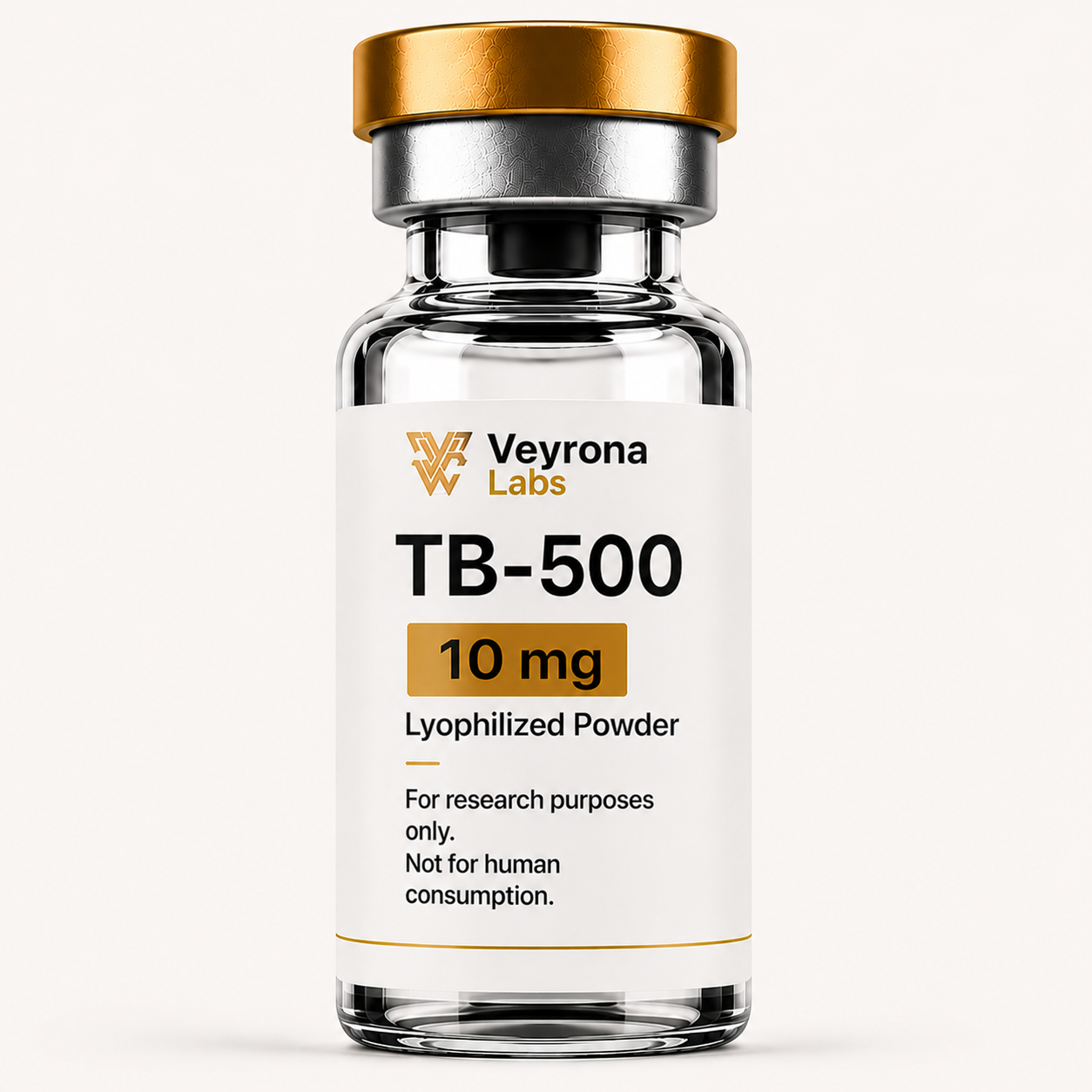

TB-500 10 mg
TB-500 is a research designation associated with thymosin-β4 biology. It is studied mainly in connection with cell movement, tissue repair, formation of new blood vessels and recovery after injury.
Why do researchers study TB-500?
Cell movement
Research into how repair cells travel toward an area of damaged tissue.
Skin and wound repair
Studies of the coordinated steps involved in closing and rebuilding injured tissue.
Blood-vessel formation
Research into new small vessels that supply repairing tissue with oxygen and nutrients.
Heart and muscle tissue
Experimental studies of cell protection and recovery after tissue injury.
What is TB-500?
TB-500 is a name used for research material connected with thymosin beta-4, a naturally occurring peptide made from 43 amino acids.
Thymosin beta-4 binds actin, one of the proteins that helps cells maintain their shape and move. This link to cell movement is central to its tissue-repair research.
Understanding the biological signal
When tissue is damaged, repair cells must move into the area, organize a temporary structure and support the formation of new blood vessels.
Thymosin beta-4 research examines how these steps are coordinated in skin, eye, heart and other tissue models.
What have studies found?
Faster movement of repair cells
Researchers observed that thymosin beta-4 encouraged skin cells to move across damaged areas and accelerated wound closure in experimental models.
Chronic skin wounds
A clinical study of a thymosin beta-4 gel reported faster healing in a group of people with long-lasting venous leg ulcers.
Repair of the cornea
Laboratory, animal and early clinical work has examined thymosin beta-4 in corneal repair, with findings involving faster surface healing and reduced discomfort.
Protection after heart injury
In mouse models of heart injury, thymosin beta-4 supported cell survival, formation of new vessels and repair-related activity in heart tissue.
Selected research
- Thymosin beta-4 and tissue repairResearch review · PubMed
- Thymosin beta-4 and wound healingLaboratory, animal and human research · PubMed
- Thymosin beta-4 and heart repairPreclinical research · PubMed
Product details at a glance
01Research areas⌄
TB-500 is studied in connection with cell movement, wound repair, new blood-vessel formation and recovery after tissue injury.
02What the package contains⌄
One sealed laboratory vial containing 10 mg of freeze-dried TB-500 material, according to the selected product variant.
03Storage of the freeze-dried product⌄
Keep the sealed freeze-dried vial at −20 °C, dry and protected from light. Let the closed vial reach room temperature before opening to limit condensation.
04Handling a prepared laboratory solution⌄
After preparation with bacteriostatic water, keep refrigerated at 2–8 °C and protected from light. Do not freeze; minimize repeated warming and cooling.
05Why the vial can look almost empty⌄
10 mg is a small mass. After freeze-drying, the material can form a thin layer or compact deposit at the bottom of the vial and may appear smaller than expected.
Match the report to the vial
Available analytical results are organized by product and batch. Always compare the batch identifier in the report with the identifier on the vial label.
For laboratory and analytical research only. Not for human or veterinary use.
Reviews
There are no reviews yet.