
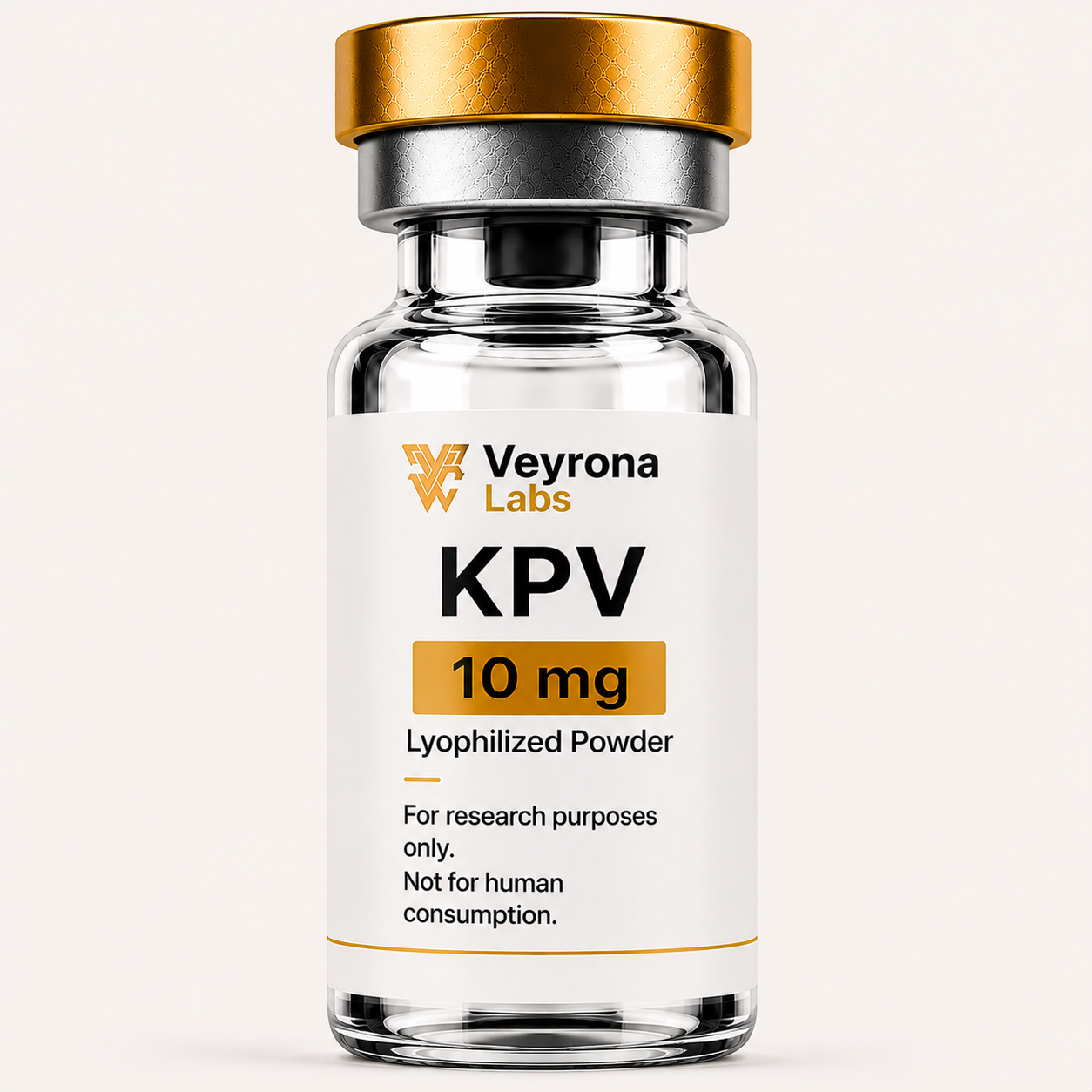
KPV 10 mg
A three-amino-acid peptide supplied for controlled laboratory research into inflammatory signalling, epithelial barrier biology and intestinal peptide-transport systems.
Where KPV is being investigated
Inflammatory signalling
NF-κB-associated responses and cytokine expression in experimental systems.
Intestinal epithelium
Barrier integrity, colonic cell responses and experimental colitis models.
Peptide transport
PepT1-mediated uptake and targeted delivery across epithelial models.
Skin biology
Keratinocyte and inflammatory-response research in cutaneous models.
What is KPV?
KPV is the tripeptide lysine–proline–valine, corresponding to the C-terminal fragment of α-melanocyte-stimulating hormone (α-MSH 11–13). Unlike the full hormone, KPV lacks the classical melanocortin receptor-binding core and is studied for anti-inflammatory activity that may involve receptor-independent pathways.
Most published work uses cultured epithelial cells or animal models of intestinal inflammation. Formulation and delivery are central research questions because a short peptide’s local exposure, transport and stability can strongly affect experimental outcomes.
What the literature supports
Cell and rodent studies support investigation of KPV as a modulator of inflammatory signalling, particularly in intestinal epithelial systems. PepT1 transport and nanoparticle or polysaccharide-based delivery have been explored to increase local colonic exposure.
Current research direction
Human epithelial models, targeted delivery and carefully designed translational studies.
Proposed biological pathways
Inflammatory transcription
Cell studies report reduced activation of NF-κB-associated inflammatory programmes and lower expression of selected pro-inflammatory mediators under experimental stimulation.
Epithelial transport
The intestinal oligopeptide transporter PepT1 has been investigated as a route for cellular uptake, helping explain why delivery strategy changes local experimental activity.
Receptor-independent biology
KPV retains anti-inflammatory activity without the full melanocortin sequence, supporting research into mechanisms that do not require conventional melanocortin-receptor activation.
What does the research show?
Colonic inflammatory responses
Human colonic epithelial-cell experiments reported attenuation of inflammatory signalling after KPV exposure, including effects linked to PepT1 transport.
Experimental colitis
Rodent colitis studies using targeted oral-delivery systems reported reductions in disease and inflammatory markers. Outcomes depend on model and formulation.
Colon-targeted nanoparticles
Hyaluronic-acid and polysaccharide carrier systems have been studied to protect KPV and concentrate exposure in inflamed colonic tissue.
Preclinical evidence map
Cell and animal studies provide the foundation for continued work on KPV transport, formulation and signalling.
Selected reading
- KPV anti-inflammatory activity in intestinal epithelial cellsPepT1-associated cellular and colitis research · PubMed
- Orally targeted delivery of KPV via hyaluronic-acid nanoparticlesColon-targeted experimental delivery research · PubMed
- KPV-loaded nanoparticles in experimental colitisPreclinical intestinal-inflammation research · PubMed
Batch-specific documentation
Use the batch identifier on the vial to locate its matching analytical report in the Veyrona Labs results library. Published reports present batch-specific identity, purity, measured content and endotoxin results where tested.
For laboratory and analytical research only. Not for human or veterinary use.
Reviews
There are no reviews yet.