
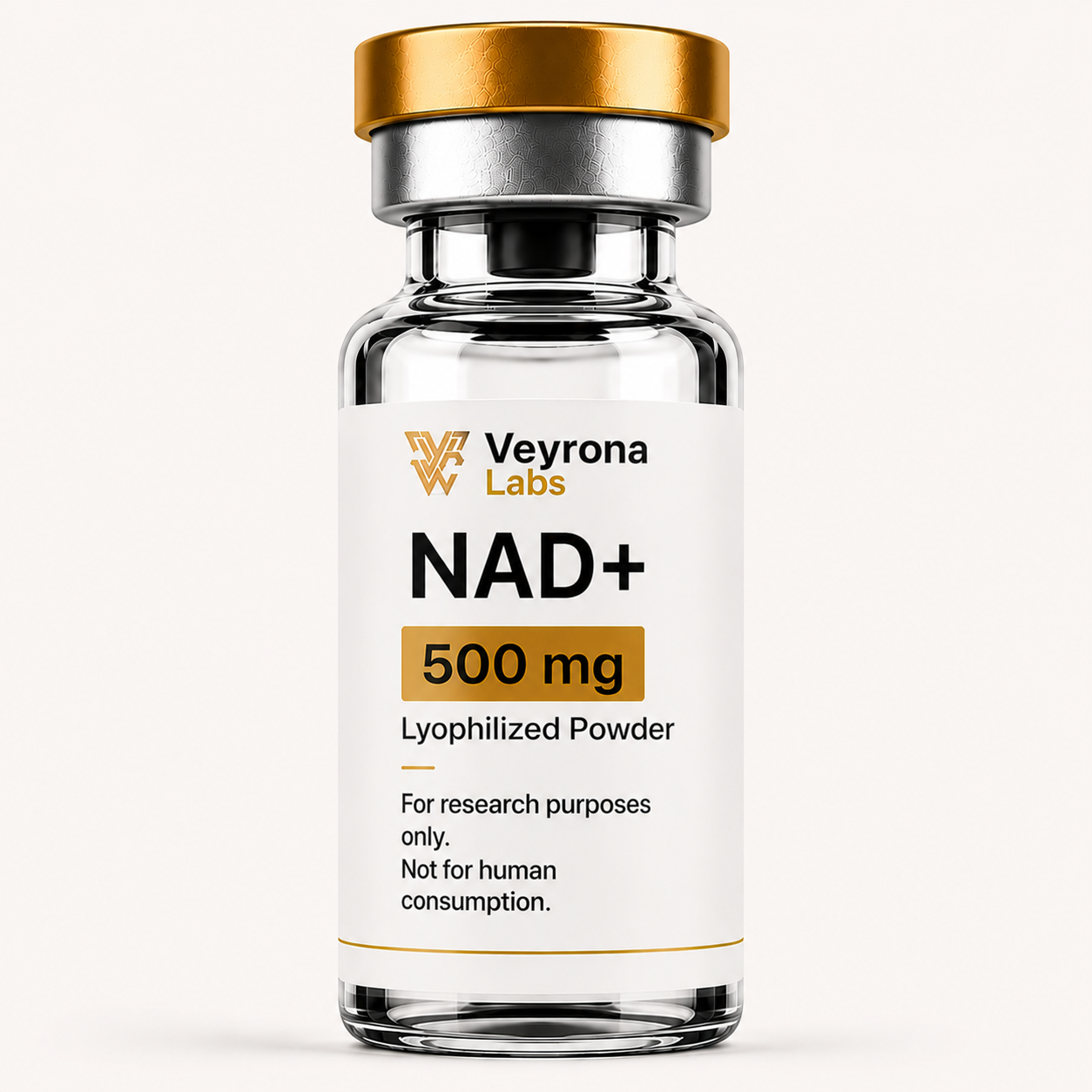

NAD+ 500 mg
NAD+ is a coenzyme found in every living cell. Researchers use it to study how cells transfer energy, maintain metabolic balance and coordinate repair and signalling processes.
Why do researchers study NAD+?
Cellular energy
How cells move energy between metabolic reactions.
Mitochondria
Energy production and the balance between NAD+ and NADH.
Cell maintenance
NAD+-dependent enzymes involved in repair and regulation.
Metabolic signalling
Communication between nutrient status, stress responses and cell activity.
What is NAD+?
Nicotinamide adenine dinucleotide, usually shortened to NAD+, is a small cellular coenzyme rather than a peptide. It can accept and transfer electrons, which makes it central to energy metabolism.
NAD+ also serves as a working material for enzymes involved in DNA maintenance, protein regulation and cellular signalling.
A link between energy and cell maintenance
Cells continually convert NAD+ to NADH and back again while processing nutrients and producing energy. This cycle connects glycolysis, the citric-acid cycle and mitochondrial energy production.
Other enzymes consume NAD+ during signalling and repair reactions. Research therefore examines both the total amount of NAD+ and how it moves between cellular compartments.
What have studies found?
Energy transfer
NAD+ accepts electrons during metabolic reactions and carries them in the form of NADH, helping researchers follow how cells process energy.
Metabolic balance
The NAD+/NADH balance is studied as an indicator of how mitochondria and other cellular systems respond to nutrients and stress.
Sirtuins, PARPs and CD38
NAD+ is used by several enzyme families that connect cellular energy status with DNA maintenance, protein regulation and signalling.
NAD+ homeostasis
Researchers examine how NAD+ production, recycling and consumption change across tissues and experimental models over time.
Selected research
- Covarrubias AJ et al. NAD+ metabolism and its roles in cellular processes during ageing. Nat Rev Mol Cell Biol. 2021;22:119–141.
- Verdin E. NAD+ in aging, metabolism, and neurodegeneration. Science. 2015;350:1208–1213.
- Belenky P, Bogan KL, Brenner C. NAD+ metabolism in health and disease. Trends Biochem Sci. 2007;32:12–19.
Product details at a glance
01Research areas⌄
NAD+ is studied in cellular energy transfer, mitochondrial function, redox balance, DNA maintenance and enzyme signalling.
02What the package contains⌄
One sealed laboratory vial containing 500 mg of freeze-dried NAD+ research material.
03Storage of the freeze-dried product⌄
Keep the sealed freeze-dried vial at −20 °C, dry and protected from light. Let the closed vial reach room temperature before opening to limit condensation.
04Storage after mixing with BAC water⌄
After preparation with bacteriostatic water, keep refrigerated at 2–8 °C and protected from light. Do not freeze; minimize repeated warming and cooling.
05Why the vial can look different⌄
Five hundred milligrams of freeze-dried material can form a compact layer or cake at the bottom of the vial. Its appearance can vary with the freeze-drying process.
Analytical results linked to the product batch
Use the batch identifier on the vial to locate its matching analytical report in the Veyrona Labs results library. Published reports present batch-specific identity, purity, measured content and endotoxin results where tested.
For laboratory and analytical research only. Not for human or veterinary use.
Reviews
There are no reviews yet.