
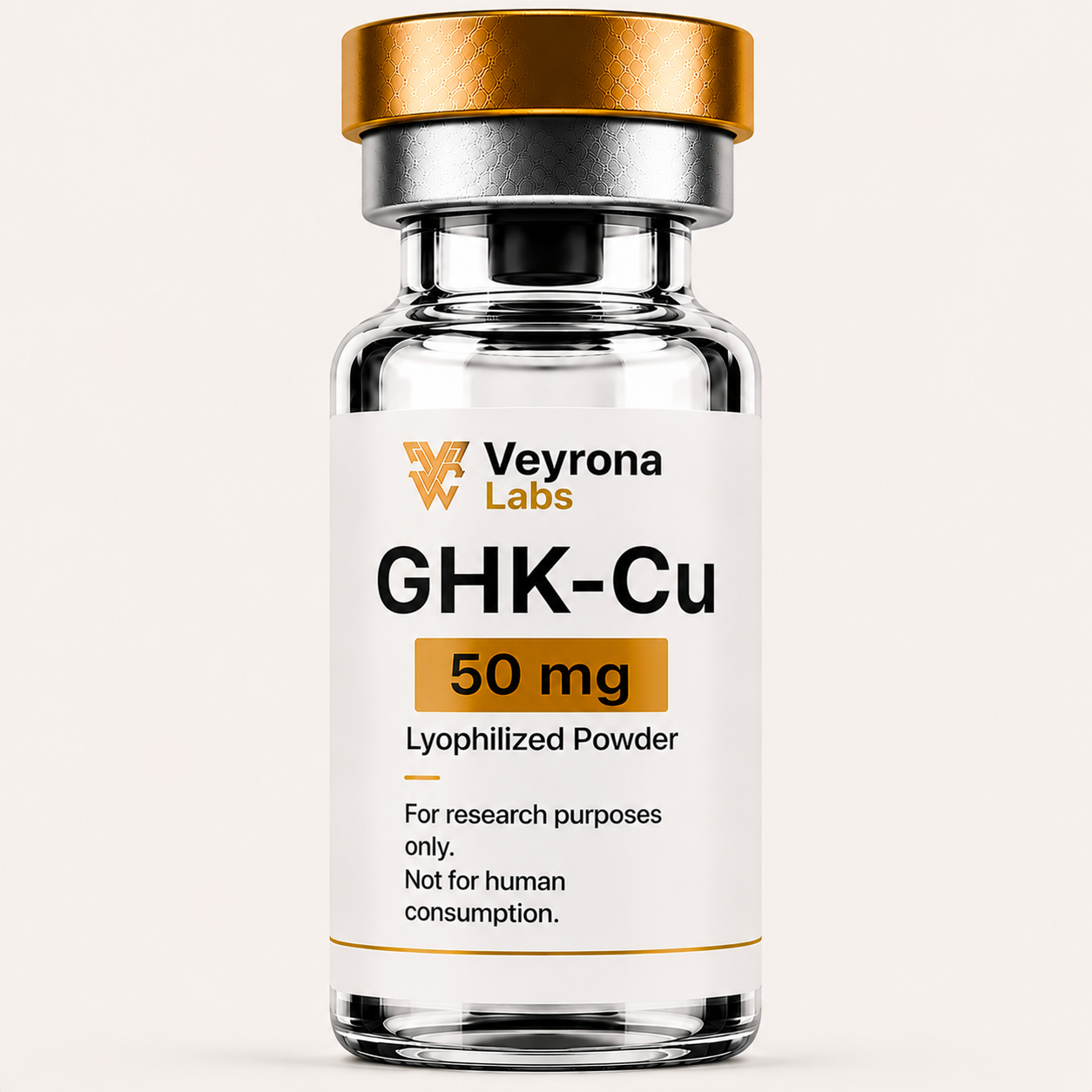
GHK-Cu 50 mg — GHK Copper Peptide
GHK-Cu, often searched for as GHK, is the copper complex of the tripeptide glycyl-L-histidyl-L-lysine. This product contains 50 mg per vial. For the larger variant, see GHK-Cu 100 mg. Available batch-specific reports are listed in our laboratory results.
GHK-Cu is a small peptide made from three amino acids and copper. It is studied mainly in connection with skin and tissue repair, collagen-related processes, wound healing and the way cells respond to inflammation.
Why do researchers study GHK-Cu?
Skin and tissue repair
Research into skin cells and the processes involved in rebuilding damaged tissue.
Collagen-related processes
Studies of cells that create collagen, elastin and other structural parts of skin.
Formation of new blood vessels
Experimental research into the small vessels that bring oxygen and nutrients to repairing tissue.
Inflammation and cell protection
Studies of how cells react to inflammation and potentially damaging reactive molecules.
What is GHK-Cu?
GHK is a peptide formed from three amino acids: glycine, histidine and lysine. Its name comes from the first letters of these three building blocks.
When GHK binds a copper ion, it forms the blue complex known as GHK-Cu. GHK was originally identified in human blood plasma and has also been detected in saliva and urine. Published observations suggest that its natural level decreases with age.
A peptide that binds copper
Copper is needed by several enzymes involved in connective-tissue formation, antioxidant protection and normal cellular activity.
GHK can bind copper strongly and carry it in the environment surrounding cells. This copper-binding ability is considered an important part of the biological behaviour of GHK-Cu.
What have studies found?
Laboratory-grown skin cells
Skin renewal and collagen-producing cells
Fibroblasts are cells that create collagen, elastin and other substances that help give skin its structure. In laboratory-grown human fibroblasts, researchers observed that GHK and GHK-Cu affected the production of TGF-β1, a protein involved in healing and scar formation.
Cell and animal study
Healing and new blood-vessel formation
One study examined GHK-Cu enclosed in very small fat-based particles. It supported the growth of blood-vessel cells in the laboratory. In a mouse burn model, researchers also observed greater formation of new vessels and faster wound closure.
Cell and animal study
Inflammation and cell protection
In an experimental model of lung inflammation, GHK-Cu was associated with lower production of the inflammation-related substances TNF-α and IL-6. Researchers also measured fewer reactive molecules that can damage cells when present in excess.
Study in people
A specific topical gel for diabetic wounds
An older controlled study tested a topical gel containing GHK-Cu as part of a structured wound-care programme. Researchers reported better closure of some diabetic foot ulcers and fewer infections than in the control group.
Selected research
- GHK-Cu and human skin fibroblastsLaboratory study of a protein involved in healing and scar formation · PubMed
- GHK-Cu, wound healing and new blood vesselsCell research and mouse burn model · PubMed
- GHK-Cu in an experimental inflammation modelCell and mouse research · PubMed
- Topical GHK-Cu gel in diabetic wound careControlled study of a specific finished gel · PubMed
Product details at a glance
01Research areas⌄
GHK-Cu is studied in connection with skin and tissue renewal, collagen-related processes, wound healing, new blood-vessel formation and the way cells respond to inflammation.
02What the package contains⌄
One sealed laboratory vial containing 50 mg of blue freeze-dried GHK-Cu material.
03Storage of the freeze-dried product⌄
Keep the sealed freeze-dried vial at −20 °C, dry and protected from light. Let the closed vial reach room temperature before opening to limit condensation.
04Handling a prepared laboratory solution⌄
After preparation with bacteriostatic water, keep refrigerated at 2–8 °C and protected from light. Do not freeze; minimize repeated warming and cooling.
05Why the vial can look almost empty⌄
Freeze-drying can leave a thin layer or several small spots of material on the bottom or wall of the vial. This appearance is normal for a small amount of freeze-dried material.
Independent laboratory testing
Batch-specific documentation
Use the batch identifier on the vial to locate its matching analytical report in the Veyrona Labs results library. Published reports present batch-specific identity, purity, measured content and endotoxin results where tested.
For laboratory and analytical research only. Not for human or veterinary use.
Majka –
Po 2 týždňoch iná pleť!! Ďakujem za info