
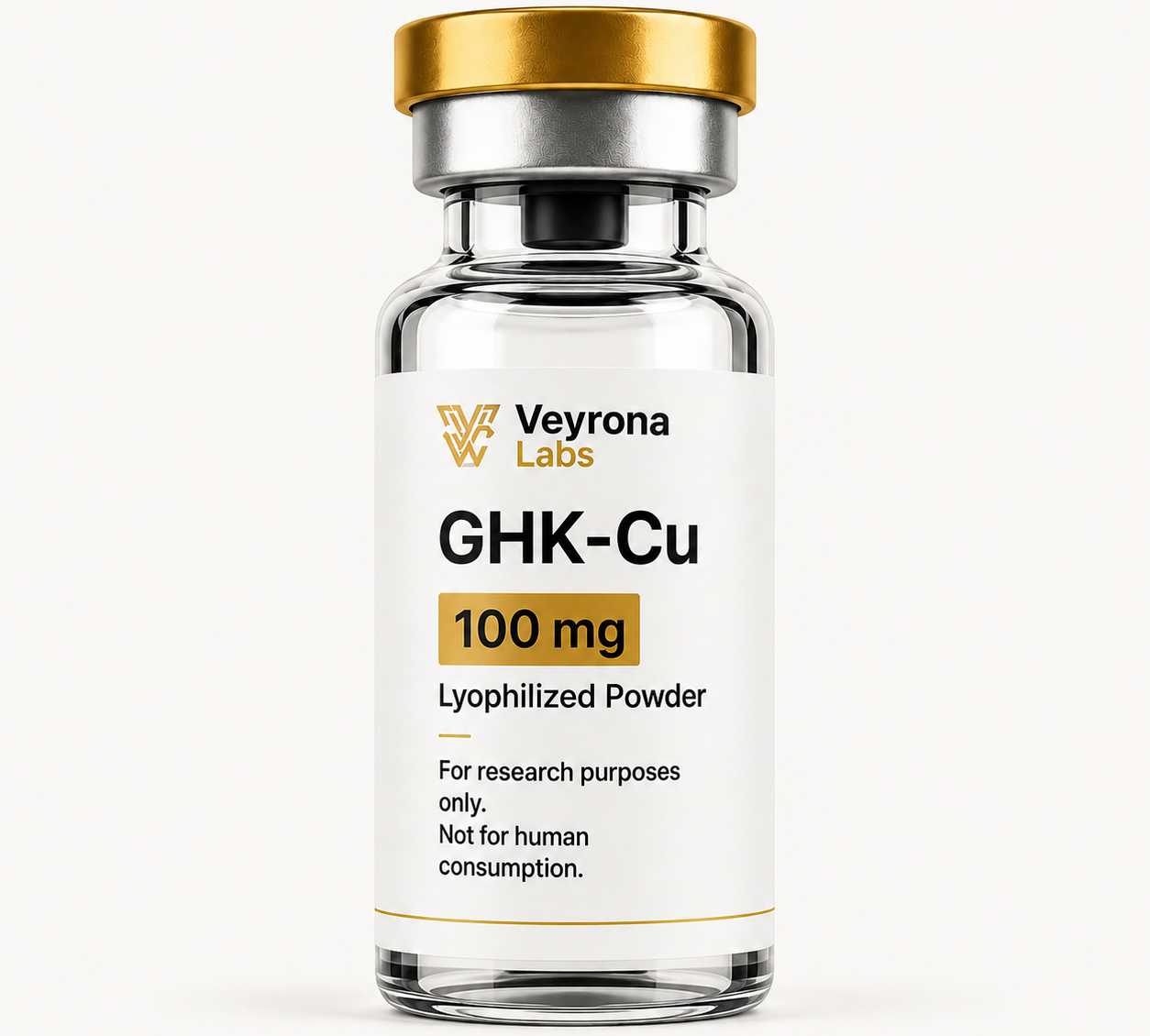
GHK-Cu 100 mg — GHK Copper Peptide
GHK-Cu, often searched for as GHK, is the copper complex of the tripeptide glycyl-L-histidyl-L-lysine. This product contains 100 mg per vial. For the smaller variant, see GHK-Cu 50 mg. Available batch-specific reports are listed in our laboratory results.
A copper-binding tripeptide supplied for controlled laboratory research into extracellular-matrix regulation, wound-repair biology, cellular signalling and copper-dependent tissue responses.
Where GHK-Cu is being investigated
Extracellular matrix
Collagen, elastin, glycosaminoglycan and matrix-remodelling systems.
Wound-repair biology
Fibroblast activity, cell migration, contraction and angiogenic responses.
Gene-expression research
Experimental modulation of repair, antioxidant and inflammatory-response networks.
Copper homeostasis
Copper binding, transport and availability in peptide-mediated cellular systems.
What is GHK-Cu?
GHK-Cu is the copper(II) complex of the naturally occurring tripeptide glycyl-L-histidyl-L-lysine. GHK was first identified in human plasma and binds copper with high affinity, forming a small signalling complex studied in tissue repair and matrix biology.
The research literature spans cell models, animal wound systems and topical investigations, creating a broad view of GHK-Cu in tissue renewal, collagen-related processes and cellular signalling.
What the literature supports
Experimental work supports effects on fibroblast behaviour, collagen and glycosaminoglycan synthesis, matrix metalloproteinase regulation, antioxidant responses and wound-related signalling. Small topical studies have also examined skin appearance and repair parameters.
Current research direction
Connecting molecular pathways with formulation-specific tissue and skin research.
Proposed biological pathways
Metal-ion signalling
The Gly-His-Lys sequence coordinates Cu(II), creating a biologically active complex investigated as a carrier and regulator of copper-dependent cellular processes.
Collagen & remodelling
Fibroblast and wound models report changes in collagen, elastin, glycosaminoglycans and matrix-remodelling enzymes, suggesting coordinated extracellular-matrix regulation.
Gene-expression response
Transcriptomic and experimental studies associate GHK with networks involved in tissue repair, oxidative stress, inflammation and cellular migration; effects are model-dependent.
What does the research show?
Matrix and wound-repair responses
Laboratory studies report stimulation of collagen-related synthesis, fibroblast activity, angiogenic responses and improved repair measures in experimental wound systems.
Skin-remodelling observations
Small studies of topical copper-peptide formulations have reported changes in skin density, elasticity and wrinkle appearance, complementing laboratory work on collagen and tissue renewal.
Broad signalling signature
Gene-expression analyses show a broad repair and stress-response signature and help researchers identify the pathways most relevant for further study.
Multiple evidence layers
Cell, animal and topical studies together map GHK-Cu across molecular pathways, tissue responses and formulation research.
Selected reading
- Regenerative and protective actions of GHK-CuPeer-reviewed review of molecular, cellular and repair research · NIH/PMC
- The potential of GHK as an anti-ageing peptideReview of matrix, inflammatory and gene-expression research · NIH/PMC
- GHK peptide as a natural modulator of multiple cellular pathwaysGene-expression and biological-network review · PubMed
Batch-specific documentation
Use the batch identifier on the vial to locate its matching analytical report in the Veyrona Labs results library. Published reports present batch-specific identity, purity, measured content and endotoxin results where tested.
For laboratory and analytical research only. Not for human or veterinary use.
Reviews
There are no reviews yet.