
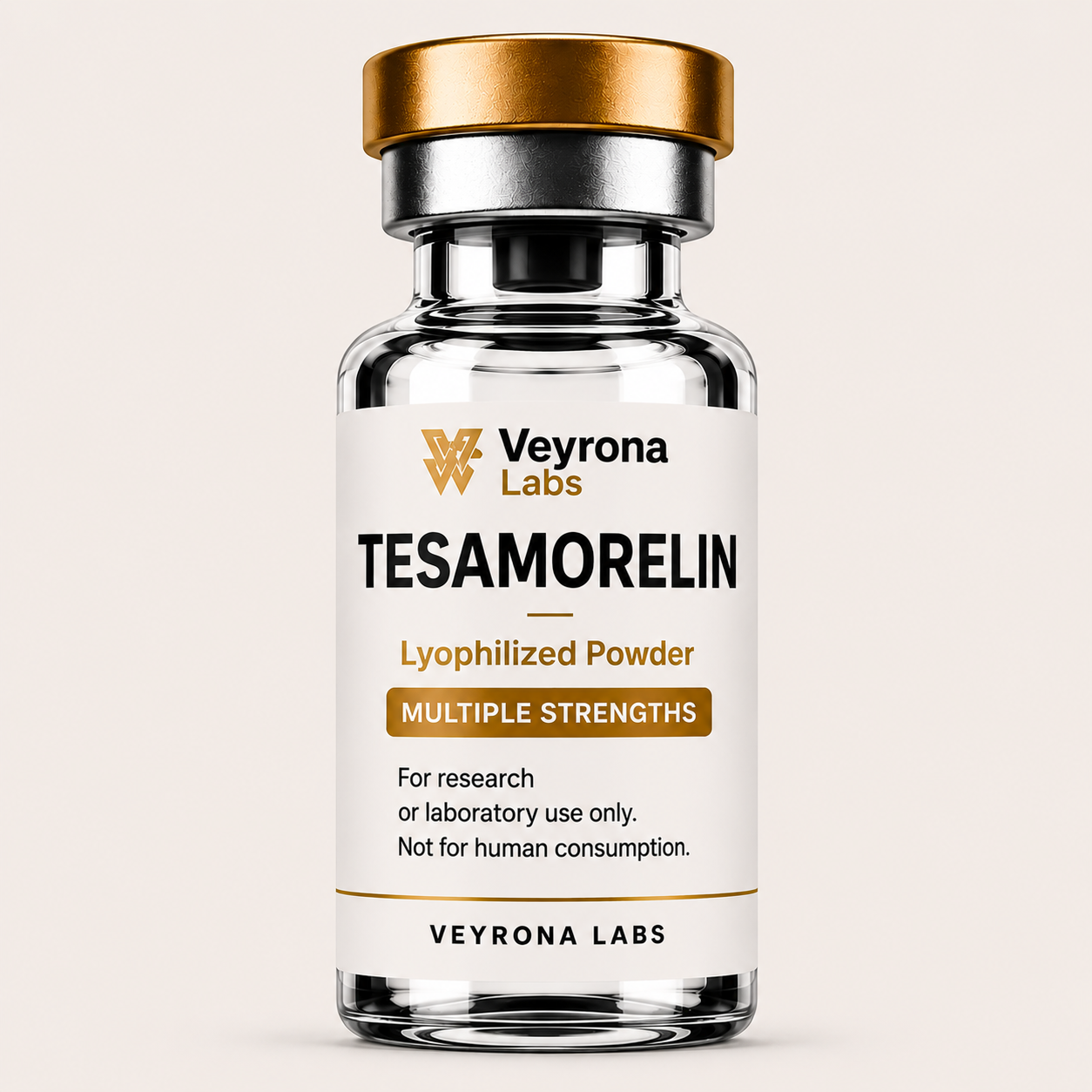

Tesamorelin 10 / 20 mg
Tesamorelin is a stabilized peptide analogue of the body’s natural growth-hormone-releasing hormone. It is studied in connection with growth-hormone signalling, visceral fat, liver fat and body composition.
Why do researchers study Tesamorelin?
Growth-hormone signalling
Research into the natural signal that tells the pituitary gland to release growth hormone.
Visceral fat
Human studies examining fat stored deep inside the abdomen around internal organs.
Liver fat
Research into changes in liver fat and related metabolic markers.
Body composition
Studies tracking waist size, lean tissue and the distribution of body fat.
What is Tesamorelin?
Tesamorelin is a laboratory-made version of growth-hormone-releasing hormone, usually shortened to GHRH. GHRH is a natural signal produced in the brain that communicates with the pituitary gland.
The peptide contains a small structural modification that helps it remain stable for longer than natural GHRH while keeping the same main receptor target.
Understanding the biological signal
Tesamorelin does not replace growth hormone directly. It activates the GHRH receptor and allows the pituitary gland to release growth hormone through the body’s own signalling system.
This makes it useful for studying the GH–IGF-I pathway, changes in abdominal fat and the relationship between body composition and liver metabolism.
What have studies found?
Deep abdominal fat
In a 26-week controlled study involving adults with HIV-associated abdominal fat accumulation, tesamorelin reduced visceral fat and improved several body-composition and lipid measurements.
Maintained body-composition changes
Follow-up research reported an average reduction in visceral fat of approximately 18% among participants who continued tesamorelin and also recorded improved body-image measures.
Visceral fat and liver fat
A six-month study using imaging measurements found reductions in both deep abdominal fat and liver fat in adults with HIV-associated abdominal adiposity.
Liver-fat research
In adults with HIV and fatty liver disease, researchers recorded lower liver fat and slower progression of liver scarring markers during tesamorelin treatment.
Selected research
- Tesamorelin and visceral fat in a 26-week studyControlled human research · PubMed
- Longer-term body-composition resultsHuman extension study · PubMed
- Visceral fat and liver fatImaging study in people · PubMed
- Liver fat and tissue changesRandomized human study · PubMed
Product details at a glance
01Research areas⌄
Tesamorelin is studied in connection with growth-hormone signalling, deep abdominal fat, liver fat and body-composition research.
02What the package contains⌄
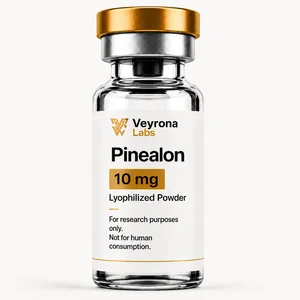
One sealed laboratory vial containing 10 mg or 20 mg of freeze-dried Tesamorelin material, according to the selected product variant.
03Storage of the freeze-dried product⌄
Keep the sealed freeze-dried vial at −20 °C, dry and protected from light. Let the closed vial reach room temperature before opening to limit condensation.
04Handling a prepared laboratory solution⌄
After preparation with bacteriostatic water, keep refrigerated at 2–8 °C and protected from light. Do not freeze; minimize repeated warming and cooling.
05Why the vial can look almost empty⌄
10 mg or 20 mg is a small mass. After freeze-drying, the material can form a thin layer or compact deposit at the bottom of the vial and may appear smaller than expected.
Match the report to the vial
Available analytical results are organized by product and batch. Always compare the batch identifier in the report with the identifier on the vial label.
For laboratory and analytical research only. Not for human or veterinary use.
Reviews
There are no reviews yet.